

The Women’s Question in Kenya: A Historical Materialist Analysis of Patriarchy and Liberation
The Women's Question in Kenya: A Historical Materialist Analysis of Patriarchy and Liberation
It is March 7th in the morning. I board a matatu headed for Nairobi's Central Business District. There is a gathering I cannot afford to miss: the International Women's Day convening hosted by Amnesty International Kenya's Nairobi Circle of Conscience. My spirits are high. Yet the city I travel through still carries the scars of the floods that raged the night before.
As the matatu rattles through traffic, my phone lights up with a post on my X (formerly Twitter) feed. The headline screams in capital letters: "A WOMAN'S BODY PICKED AT UHURU PARK." The caption beneath it reads: "Middle-aged woman's body, allegedly swept away by last night's roaring floods, found clinging lifeless onto a pipe."
My heart races.
In that moment, my mind drifts to the quiet and often invisible struggles women endure while navigating the systemic violence of our society. Somewhere in the city's unforgiving currents, a woman — a prisoner of want — may have paid the ultimate price, abandoned by the very systems that claim to protect her.
My thoughts wander further. Two days earlier, a friend and I had been locked in a long conversation about the turbulence of modern love and marriage, about men learning, often reluctantly, how to live alongside women who refuse subordination. We asked ourselves why divorce cases have become so common. Worse still, why so many women remain trapped in loveless, violent marriages, enduring them in the name of children and survival.
The matatu approaches the CBD. Outside the window, the city reveals another face. Young men and women idle along the streets, glue bottles pressed to their noses; the rejects of the world, so they call them.
Then something interrupts my train of thought.
A middle-aged woman seated a few rows ahead erupts into a heated phone conversation. Her voice is sharp, trembling with years of restrained anger. It sounds like a woman who has reached her limit, confronting a man who has mistaken her silence for submission. A woman who has finally decided to walk out of an abusive marriage.
The matatu falls silent.
For a brief moment, the usual chaos of the city fades. All that remains is the hum of the engine and the rhythm of the tyres against the road.
So, comrades, how can we, and the people we struggle alongside, claim to understand the women's question without confronting the origin of patriarchy and its concrete manifestations? To do so is to speak without investigation. What could be more unforgivable for a human rights defender than the tendency to pronounce oneself on subjects without delving into historical materialism?
It is at this moment, aboard a Super Metro matatu, that I begin scribbling notes for this essay; an essay that intends to analyze the origin of patriarchy and what must be done to liberate women.
We have seen how right Engels was when he demonstrated in his book The Origin of the Family, Private Property, and the State, that patriarchy is not timeless, and that it is inseparably bound to capitalism; the supremacy of man was a consequence of his economic supremacy. There was clearly a society that knew no subjugation of any kind, not even of women by men.
So, comrades, how then did patriarchy emerge?
Communal Stage
In early human society, what Engels, drawing from Morgan, calls the stages of savagery and barbarism, there existed no systematic oppression of women. Survival depended on collective effort. The relationship between men and women was largely complementary, not hierarchical.
But this did not last.
With the development of tools, the domestication of animals, and the cultivation of land, production expanded. For the first time, surplus was created. And with surplus came accumulation — a new form of wealth.
What had once belonged to the collective began to concentrate in the hands of men; in the form of cattle, tools, land, and eventually even women reduced to property. This marked a decisive rupture. Economic power shifted, and with it, social power.
In the Kenyan context, this transformation took distinct forms across communities including polygamous communal households among the Luo, Maasai, Kalenjin, Kamba, Somali and others. But the underlying logic remained the same: the consolidation of male economic power.
Polygamy which was largely practiced in most communities and still prevails today in some spaces especially among the Muslims is nothing but a system designed to privilege men, entrench patriarchy, institutionalise emotional neglect and keep women powerless. By putting multiple women under one man, the women are not only deprived of full sexual enjoyment, happiness and love but also set the co-wives as rivals.
According to Mghanga, jealousies arising from the knowledge of the fact that men could not satisfy their several wives and concubines sexually perhaps made many male dominated societies evolve the barbaric culture of the circumcision of women, cutting away their clitorises to reduce sexual urge and pleasure in them! How else can one explain this brutal culture of female circumcision?
Women were systematically pushed out of ownership and inheritance of productive resources. They became economically dependent, their labour exploited, their autonomy curtailed. Bridewealth reduced them to objects of exchange. Culture was weaponised to justify their subordination.
I can also claim with considerable justification that what is today defended as "African culture" is, in many cases, the historical product of this transition; the institutionalisation of patriarchy. When misogynists claim that women are "naturally" inferior or must be submissive, they are not defending culture, they are defending domination. In their wisdom or lack of it, submission means nothing but enslaving women.
In addition, women carried the burden of labour — in the fields, in the home — yet were denied dignity, denied decision-making power, denied even basic freedoms. Harmful practices, including female genital mutilation in several communities, were justified through myth, control, and fear.
Comrades, all these backward beliefs that prevail even today, from overworking women, reducing women to machines for giving birth to condemning women to the kitchen all originated here. These are not traditions to be preserved; they are chains to be broken.
Slavery and the consolidation of Patriarchy
As wealth accumulated, patriarchy hardened. Engels calls this the "world-historic defeat of the female sex."
The family was reorganised, not around love, but around property. Monogamy was imposed on women to guarantee legitimate heirs. Fidelity became a one-sided demand. Women's bodies became instruments for securing inheritance.
Their status? Reduced to servitude.
The expansion of slavery deepened this brutality. Along the East African coast, women experienced layered oppression; as enslaved persons, as people of colour, and as women. They were used as labourers, as sexual property and as reproducers of enslaved populations. Their bodies were sites of violence and control.
In his book, The Wretched Africans, Joe Khamisi captures those traumatising moments verbatim from Dr. David Livingstone (1866):
"We passed a woman tied by the neck to a tree and dead, the people of the country explained that she had been unable to keep up with the other slaves in a gang, and her master had determined that she should not become the property of anybody else if she recovered after resting for a time. Local people admitted that when they managed to rescue such slaves, they would only feed them up in order to sell them again."
The "civilised" stage: Colonial and Post colonial Kenya
The assertion that the condition of women improved in the feudal stage onwards to post-colonial Kenya falls short of common sense for many reasons.
Colonialism did not dismantle patriarchy; it reorganised and intensified it. Women were exploited as workers, dominated as people of colour, and subordinated as women. Triple oppression was not an exception; it was the rule.
Independence did not break this structure. It inherited it.
The postcolonial state preserved the economic and social foundations of inequality. Representation of women in politics has increased, yes, but representation without transformation is a dead end.
It has been written about times without numbers, that the Kenyan dream did not materialise with sham independence. We inherited the colonial structure without dismantling the structures under which patriarchy blossomed. Colonialism and the accompanying social relations were inherently patriarchal. For example, between 1969 to 1992, no more than five women had ever been members of parliament; it was a club of men. Besides, between 1963-1969, there was no female member of parliament, a characteristic example of how colonialism did not make the condition of women any better.
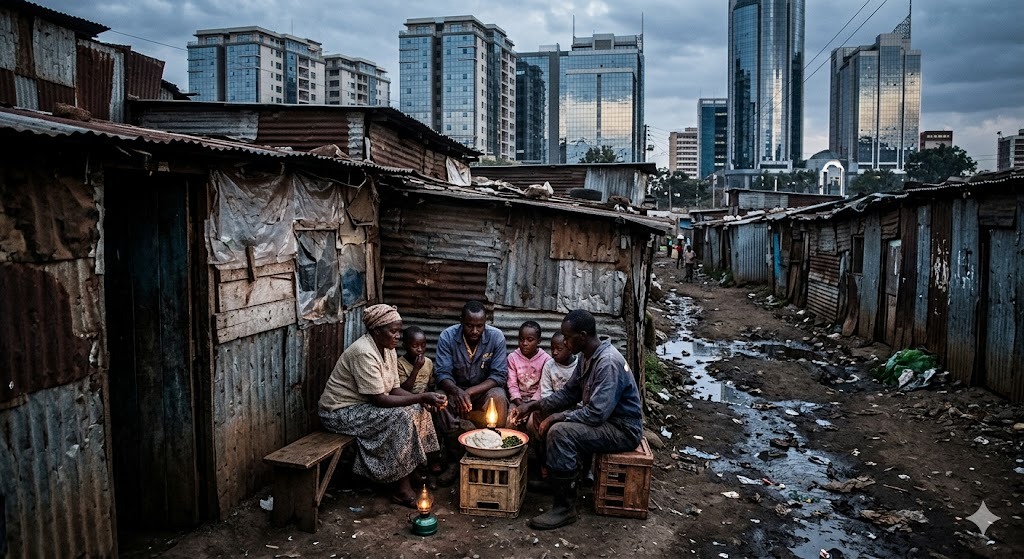
So far as historical records show, anything that has been won by women in this country has been a product of struggle. Nothing has been given to women for a "God bless you." The introduction of sweeping reforms like the now defunct Marriage Act 1971, Matrimonial Property Act 1983 among others, stretching to the numerous wins in the 2010 constitution points to this fact. And what, in fact, do we find to be the number of women in parliament today? It is approximately 100. Comrades, is the woman who lives in the slums of Kariobangi North or Mathare feeling the impact of this representation? Are women who toil daily, hawking in Kisumu to make ends meet proud of KEWOPA? Are women in Kericho who spend hours in tea plantations where exploitation, rape is prevalent proud? Are women who endure gender-based violence, FGM, domestic violence of all shades, forced marriages, femicide, unemployment happy today on the International Women's Day? Comrades, I can go on and on.
On Liberal, corporate and "Red Carpet" feminism
As I sit at this event at Rex Maasai Hall, Amnesty Offices admiring the thought-provoking discussions from the panelists, the question of red-carpet feminism, liberal feminism and corporate feminism remains stubborn in my mind. What then should be our attitude towards this subject comrades?
History teaches us that liberal, corporate, and "red carpet" feminism do not seek to dismantle the system; they seek inclusion within it. They celebrate individual success stories while leaving the structure of exploitation untouched.
They reduce the liberation of women to individual struggle of women penetrating barriers instead of smashing structures that reinforce those barriers.
Over and above, women are not a homogeneous class. There are propertied women and propertyless women. There are those who benefit from the system and those crushed by it. To speak of "women's progress" without confronting these contradictions is to distort reality.
The system is clever. It elevates a few women into positions of power, not to end oppression, but to mask it. To create the illusion that equality is being achieved.
The 2024 Finance Bill exposed this clearly. Women in positions of power stood with their male counterparts in supporting policies that would deepen the suffering of ordinary women; from rising living costs to targeted taxes on basic necessities like sanitary towels, diapers among others.
It was not elite feminism that defeated the punitive finance bill. It was the organised resistance of the masses; working-class women and men in the struggle.
What is to be done?
To begin with, we must recognise that women face oppression specifically as women, alongside other forms of injustice. True liberation as Comrade Obath says, requires confronting this reality not only in society at large but within our own daily lives; at homes, relationships with our sisters, girlfriends, mothers, wives, sisters-in-law. The struggle must begin with challenging and unlearning ingrained patterns of domination and inequality, including the persistence of male chauvinism shaped by harmful traditions, religion and reinforced by modern systems of power.
Secondly, we must acknowledge that a just and equal society cannot be built on a system that prioritises profit over human dignity. A more equitable alternative, one grounded in shared ownership, collective responsibility, and the elimination of exploitation, offers the conditions necessary for genuine freedom. In such a system, equal access to resources, education, employment, and social services would weaken the material foundations of gender inequality and allow both women and men to participate fully and equally in all areas of life. It is under that society that private housekeeping will be transformed into social industry thus neutralising the emotive issue of unpaid domestic labour.
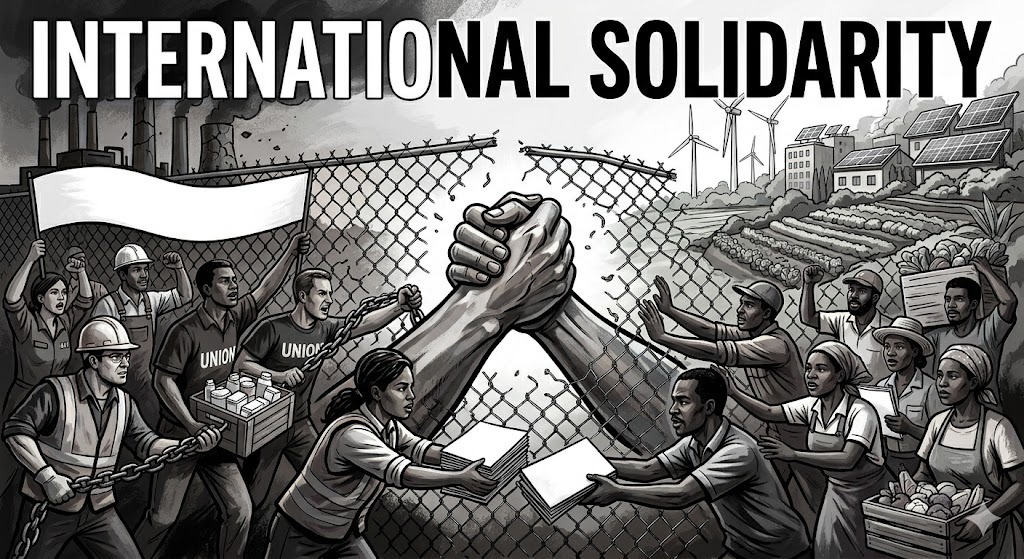
Ultimately, the struggle for women's liberation is inseparable from the broader struggle against all forms of exploitation and oppression. It demands unity between oppressed women and men, while recognising the leading role women themselves must play in advancing their freedom. Only through sustained collective effort can society move toward true equality, where dignity, solidarity, and justice replace domination, and liberation is realised for all.
More power to women, more power!
Abash Patriarchy, abash!
Long live comradeship and solidarity between oppressed women and oppressed men!
References
- Engels, F. (1884). The origin of the family, private property and the state.
- Mgangha, M. (2014). The condition of women in Kenya — Notes from prison.
- Khamisi, J. (2016). Wretched Africans, a case study of Rabai and Freretown slave settlement.
- Mfanga, T. (2021, July 22). To the red carpet feminists: Congratulations for breaking the glass ceiling.
- Ngugi wa Thiong'o & Ngugi wa Miri. (1977). I will marry when I want.
By Comrade Victor Onyango
Feminist | Human Rights Defender
[email protected]



0 Comments