Living on the Edge, inequality and Persistence in Nairobi
A Life on the Brink – Wages vs Survival
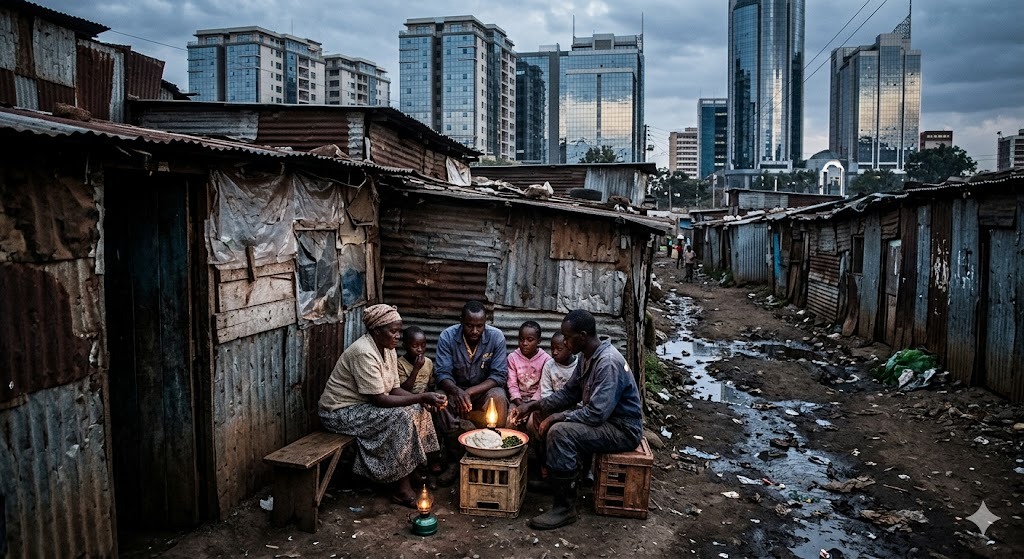
Being Kenyan and coming from a poor background feels like living with a death warrant. You overwork yourself for peanuts and live in constant fear because of the impoverished conditions in the ghetto. Kenya's minimum wage stands at 15,200 Kenyan shillings. This is not enough to cater for a house which will cost 4,000 for a single room in the ghetto not inclusive of water and electricity, when you add water and electricity then it costs 5,000 shillings. When you take out money for transport to and from your work which would cost around 200 shillings per day making it to 6,000 shillings per month, then you are only left with 4,200 shillings which makes it around a dollar a day. That leaves other basic human needs unattended to like healthcare and education.
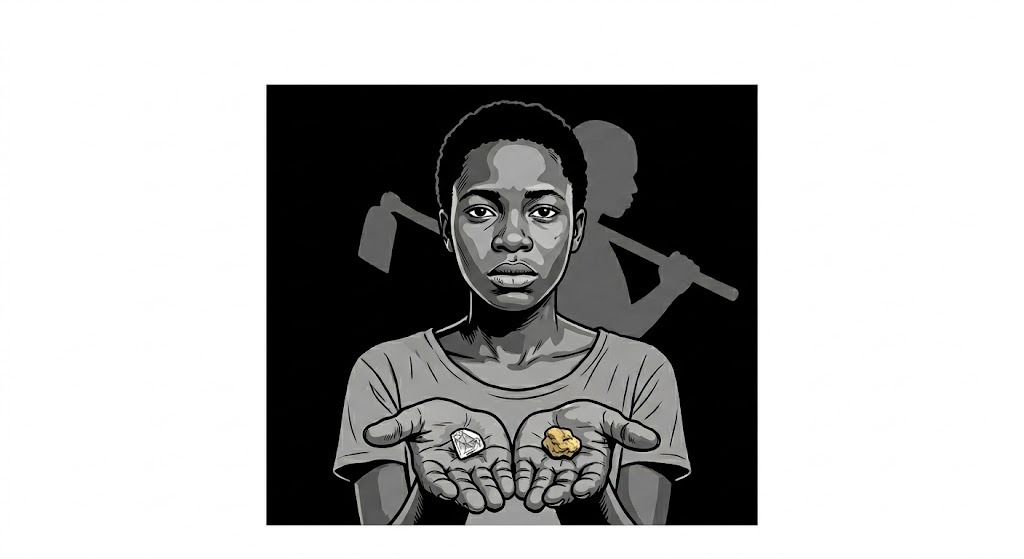
Every breath in this situation feels like it could be your last. The stark difference between us and those who enjoy the spoils of life is that we must struggle daily to afford basic needs like food. In a city of overflowing abundance, some people survive by scavenging in dumpsites for crumbs left by the more fortunate. It is projected that there are close to 100,000 formal waste pickers in Kenya. On the other hand, there exists an informal waste picking economy which is historically linked to poverty and is mostly associated with vulnerable groups such as street families and slum dwellers, many of them women and children. Because of the informal nature of their work, their exact number is unknown.
Childhood Memory and Adult Reality
Growing up, my siblings and I devised various tactics to overcome hunger pangs. During those dark times, we would drink lots of water before meals to feel fuller from the little portions we managed to get. There was never enough to eat. Now as a young adult, I dread the end of the month as that's when I have to pay the rent — because the end of each month always means I am one step away from homelessness if I lack rent. In our part of the city, we live with our fingers crossed every day because landlords and landladies increase the rent as they wish, often without any consultation. They will tell you, "Si unajua gharama ya maisha na mafuta imepanda" ("You know the cost of living and fuel has gone up"), and move on, leaving you surprised and trying to understand how immobile houses are affected by rising fuel prices.
Healthcare in Crisis
When you get sick, you would rather boil lemon, ginger, and garlic than go to public hospitals as they are in dire condition due to the historical defunding of public institutions under neoliberal capitalism. In the Ksh. 3.6 trillion budget presented before Parliament, the Healthcare sector received Ksh.141.2 billion representing 11% of Kenya's annual allocation. Of the allocation, Ksh.116 billion would go to the Medical Services department and Ksh.24.6 billion to Public Health Standards. In the budget, the sector received a funding cut after the National Treasury reduced its allocation by Ksh.5.6 billion compared with financial year 2022/23 when it received Ksh.146.8 billion. In 2024 during budget reading there was a budget cut for the ministry of health. Amid the growing demand for a stronger public health system in Kenya, the recent announcement of the Ministry of Health being allocated only Sh127 billion for the 2024-25 financial year has been met with widespread disappointment and concern.
The budget cut of over Sh11 billion has come as a significant shock to the country. Private hospitals are out of reach for the average Kenyan, as they overcharge and take advantage of the lack of alternatives. Even the middle-class fear getting sick as one hospital bill can lead to homelessness or poverty. Kenya has become a wild jungle where survival is for the fittest and swiftest. We scramble for the few opportunities available, lest we perish. Upward mobility demands immense sacrifice, cunning and treachery — attributes that should not be celebrated.
Ghetto Solidarity
In a conversation with a colleague some time ago, she told me that ghetto life is sweet. I wondered why, and she said it was because people in the ghetto love and share with each other. I wanted to explain the reasons behind this culture, but I smiled and agreed. I wanted to tell her that we were forced into this sharing life. Still, I had to appreciate the compliment because, most of the time, ghettos are only recognized for crime and violence.
We didn't become like this by choice. Circumstances forced us to share, or we would starve to death. By standing with others, you ensure that when your turn comes, people will stand with you too. Our culture of sharing and supporting each other is our only saving mechanism. It's the only one we know, and those we help will reciprocate during our hard times. Here, we share even as little as a quarter litre of cooking oil. Sometimes we put aside our differences and unite to combat hunger, high hospital bills, and rent. Barter trade still exists; if you have salt and I have flour, and we don't have money, we barter. That's our mode of survival. Our motto here is: we must survive.
Labour Exploitation in the Agro-Export Sector
My aunt has worked in the agro-export sector for over 20 years. This sector focuses on packaging and exporting agricultural produce. She has never received any employee benefits, and even taking sick leave when she is very ill risks her losing her job. Capitalism has taught us to exploit people as much as possible for personal gain, and my working-class aunt is a classic example of that exploitation. She has never had enough money to treat herself, enjoy the fruits of her labour, or even buy the foodstuffs she packs for export. When I ask her about it, she says those items are for white people and she can't afford them. This is how capitalism has alienated her from the products she handles every day.
Her story represents the experiences of many others, including myself. I once worked with her in those companies for a few months. The working conditions were harsh and unfriendly, but at the time, it was my only option. The environment inside was freezing, which worsened my chest problems and meant spending all my earnings on medication. I would arrive at work around 7 am and leave at 8 pm, utterly exhausted and disconnected from what was happening around me.
A City Divided: Rich vs Poor
This extractive and exploitative system is also evident in the geospatial distribution of neighbourhoods and residential areas in Nairobi. Spatial planning is concerned with how space is created and arranged. In the layout of a settlement, it is the function of planning to define a network of public spaces, in relation to buildings and other activities, which in turn contributes to the settlement's spatial form. Every middle-class and wealthy estate is surrounded by a slum or poor neighbourhood. The people in the slums provide cheap labour for the rich and are paid so little that they cannot improve their lives or escape poverty. This creates an unending cycle of rich people exploiting the poor, which continues to widen the class gap. As we move into the future, only two classes are emerging strongly: the rich and the poor, as the middle class continues to thin out.
For those who are fully unemployed, their struggle is different from those like my aunt, who are paid meagre wages, or the low-class person with a menial or casual job.
As the number of millionaires in the country increases, so does the number of people on the verge of starvation. This situation brings to mind Fidel Castro's quote:
"Capitalism has neither the capacity nor the morality nor the ethics to solve the problems of poverty."
The slum population is growing day by day. Kibera, Mathare, Soweto, and other slums are expanding and becoming denser, while the number of high-rise apartments in the city is also increasing. Nairobi is a metropolis with an estimated population of 5 million people and around 60% of the population live in the slums. The rich are getting richer, and the poor are getting poorer. Capitalism has failed to address the issue of inequality and most of the worst injustices, such as the lack of provision of basic commodities for all. It can never address these issues because it is built on an immoral drive for accumulation.
The worsening conditions have stripped people of their dignity, forcing them to do anything for survival. We have seen people with degrees carrying placards on the streets pleading for jobs. Mothers and children sleep out in the cold while people who have built houses have no tenants, and there is an increase in the number of beggars on the streets. The recently conducted national census of 2019 showed that a total of 46,639 Kenyans are living on the streets across the country. The city of Nairobi has the highest number of street population at 15,337. And the numbers continued to increase after the Covid-19 pandemic which rendered people jobless and homeless because they couldn't afford to pay for housing.
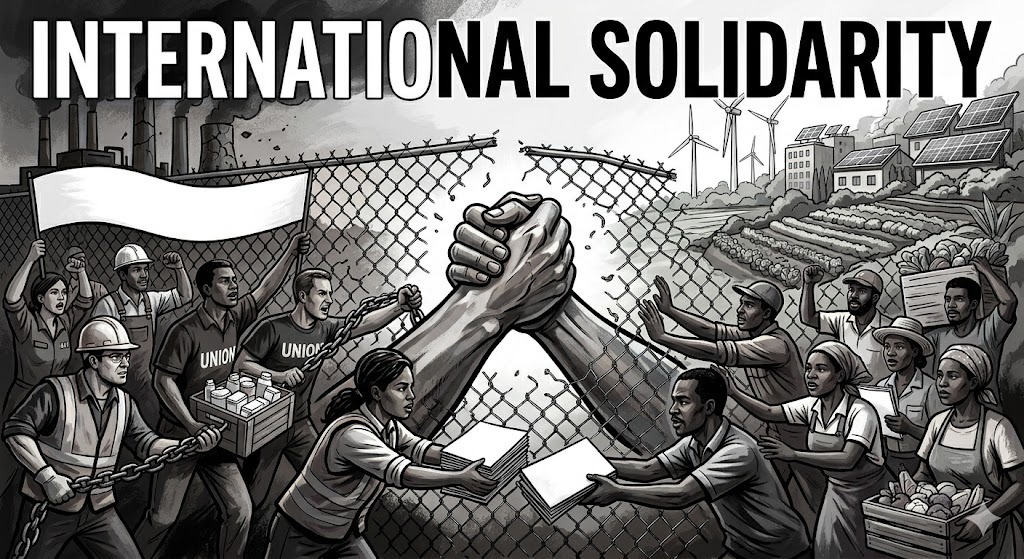
This has also led to a disrespect for human rights and eroded our humanity as a people. We see each other as mere labour machines, constantly looking for opportunities to exploit others and rise at their expense, with no shame or remorse. To improve our material conditions and win the war against capitalism, we must adopt a collective approach and effort. That is the only way to achieve victory.





0 Comments