A PLATE OF SWEET POISON
IS IT LUNCH, DINNER, OR A PLATE OF YUMMY POISON? THE TRAGEDY OF A CAPITALIST-CONTROLLED FOOD SYSTEM IN KENYA
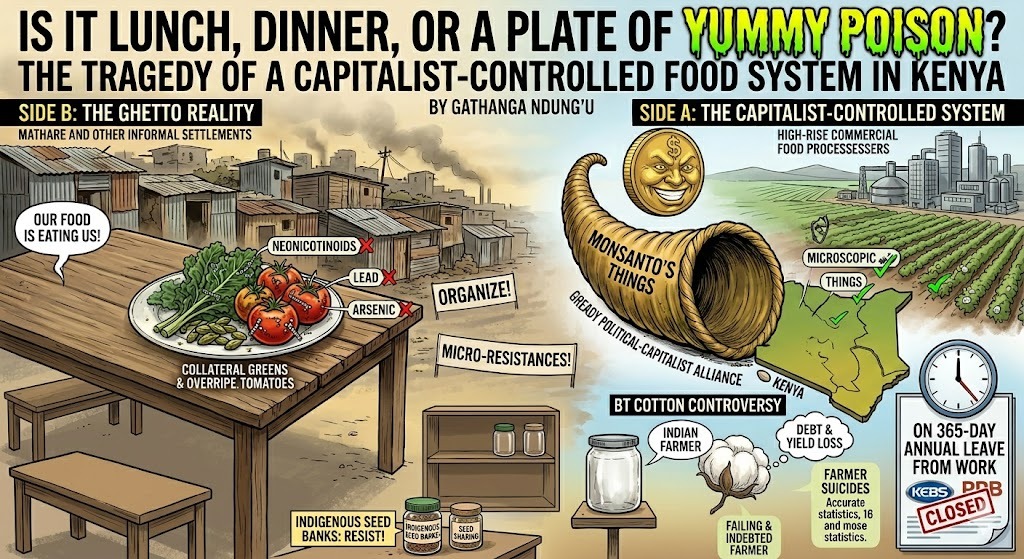
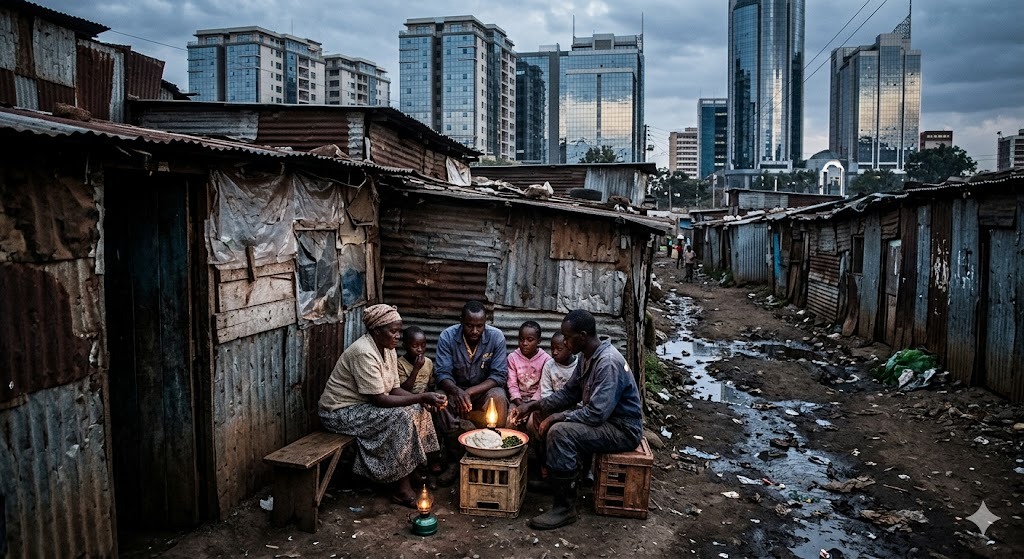
Being in Kenya is a tough choice for one to make. And it is worse, being in Mathare or any of the many ghettos in Nairobi. In this 'othered' side of the city, you have no choice at all but to take whatever is served, or to put it more correctly, to swallow whatever is shoved down our throats. We eat to survive, whatever crumbs we find to fill our stomachs. We have completely lost our say on the quality and safety of what gets in our system. In this side 'B' of the city, it's always about quantity over quality and safety, food security over food sovereignty. In short, the primary goal is to fill our tummies to the fullest without putting into consideration 'the rich man's problems' of nutritional value, quality, and safety. It's now clearly obvious that being raised in the ghettos of Nairobi, you can die from anything, even by eating the foods you consider healthy for your system. Everything is not safe at all. One might try to be a vegetarian to keep lifestyle diseases at bay, only to end up ingesting thiamethoxam, neonicotinoids, or some heavy metals such as lead or arsenic in your favorite fruits or indigenous vegetables. In most cases, it doesn't matter whether your vendor is a reliable source of healthy organic foods or not; the food system in Kenya will still cause all the hassle for consumers, for healthy foods. The food system is a health hazard, from the farm to your favorite mama mboga or supermarket. To a greater extent, and without wanting to be an alarmist, I would say we are doomed!
OUR FOOD IS EATING US!
Whenever I am shopping for groceries and fruits, whether in Wakulima Market, Kangundo Road Market, or Saika, I am always worrying about the conspicuous, succulent tomatoes on display, which are eye-catching for most customers. Long before I understood mchezo wa tawuon, as Nairobians call it, or should I rephrase it to mchezo wa ushago since farming is done mainly in the countryside? Long before I understood the farming abracadabras and agri-tricksters, I used to be dumbfounded by big, red, succulent tomatoes in the market, which came at ridiculously affordable prices. I used to like them; they were very fresh, juicy, and would not spoil very easily. The same was the case for our favourite collard greens, which many Kenyans mistake for kales, and bananas, too. Many Nairobians are ignorant of the dubious methods employed by some of our farmers in ensuring that their products are 'visible' in the market. Since I took an interest in knowing what I ingest, I have become choosy in the market, though I am not sure if it really helps in this polluted market. Nonetheless, I resorted to the less conspicuous and normal-sized vegetable to avoid falling into the chemical traps. I'm just hoping beyond hope that this hassle helps me cut down the amount of poison I ingest in Nairobi because I decided I cannot entirely escape poison pills.
Behind this tantalizing appearance is a barrage of highly hazardous pesticides (HHP), which are found in 76% of the pesticides that are used to inundate our food crops, for bumper harvests. In the past 10 years, Kenya's appetite for more agrochemicals has been growing, with a variety of herbicides, fungicides, and insecticides being imported from markets such as the European Union (EU). Surprisingly, and ironically, some of the agro-chemicals bought from the EU markets are banned in the same markets, and can only be sold to outside markets such as Kenya. Until June 2025, 77 harmful products have been studied and shown possibilities of being mutagenic, carcinogenic, endocrine disruptors, and detrimental effects to the reproductive system, and were still in use despite their banning from their countries of origin. Poisons such as acephates and chlorothanils are dressed in beautiful packages with promises of bumper harvests in Africa. What we are not told is that these are poisons for our biosphere: water, air, vegetation, humans, bees, earthworms, and our soil that we fought for through our sweat and blood! From the farm, our food goes through the post-harvest procedures. Once again, our foods are 'showered' with another round of chemicals such as sanitizers (e.g., quaternary ammonium compounds) to control decay, preservatives (e.g., sodium benzoate), and ripening agents such as calcium carbide. Although not all have been documented to have a negative impact, they still pose a significant human health challenge. Another phase involves transportation, which has exposed Kenyans to all manner of contamination from bacterial to fungal due to poor handling methods.
Due to these, cases of cancer and other diseases in Kenya have tremendously skyrocketed over the past 15 years. This has been largely linked to a polluted environment and the food that we eat. Ironically, due to our greed, our food is literally 'eating' us through different cancers. According to 2025 statistics, pneumonia, cancer, and cardiac arrest are the leading causes of mortality. The big question then is: when and how did our foods turn against us?
Back in 2020, during the COVID-19 lockdown and shutdowns, many poor communities were pushed to the edge. Without jobs and the risk of starvation being imminent, many resorted to growing vegetables along the many rivers in the city. At the same time, some communities, such as in Kayole and Mathare, faced serious water shortages, which forced some of these new Nairobian farmers to use water from the highly polluted rivers. This posed serious short-term and long-term health risks arising from faecal contamination and accumulation of heavy metals in vital organs such as the liver and kidneys. This helped alleviate starvation in these communities, as some relied on these vegetables for domestic consumption, while others sold them for sustenance. The 2019 collaborative report between Nation Media Group and the University of Nairobi, dubbed The Toxic Flow, revealed the extent of heavy metals pollution, especially from aluminum, lead, chromium, and mercury. Unfortunately, poor ghetto dwellers bear the brunt of poor regulation of industries that dump their raw, untreated effluent into the river, making it not only an eyesore to the public but a health threat. Bearing the brunt of this negligence is a population that lacks health insurance coverage, and without this, their lives survive on hopeful wishes of good health. So, when we say our food is eating us, for WE, the othered population, our food is munching us!
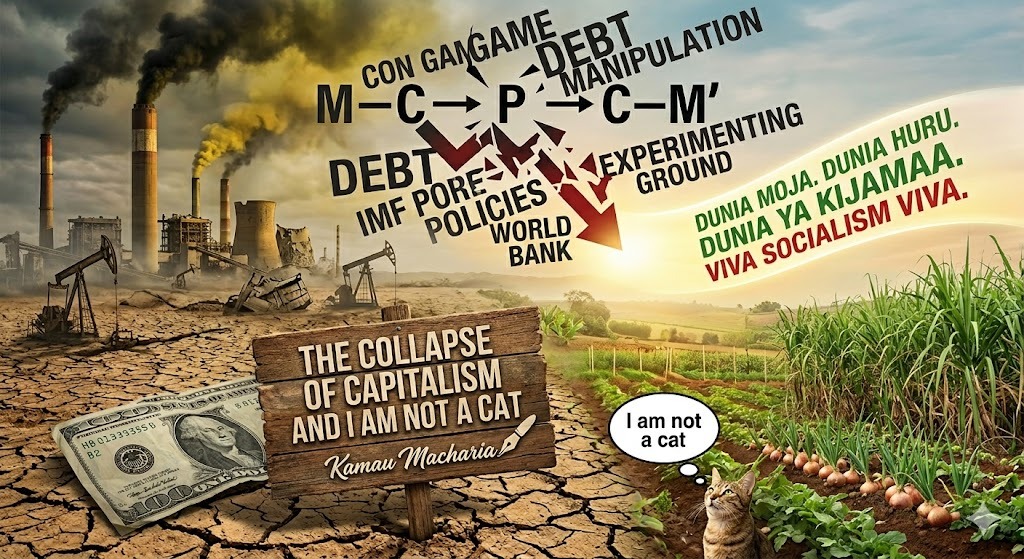
Every year, our televisions or dailies have to feature a case of sugar laden with mercury, unfit cooking oil, or maize with aflatoxin. This news has become so common that we have normalized being poisoned. I remember back in 2019, how we all laughed off this with some memes online, saying that as Kenyans, we should make peace with the idea that we have probably consumed the whole periodic table of elements, in one way or another. Yes, we literally laughed at our problems using memes. We brushed off such a serious matter that would have, in other countries, caused a nationwide revolt. All this happens while the Kenya Bureau of Standards (KEBS) and Pharmacy and Poison Board (PPB) continue to watch helplessly as the tenderpreneur political class commits a silent democide. In Necropolitics, Achille Mbembe talks of those sections of the population that seem disposable, those that the government feels entitled to dictate life or death. Others describe them as 'more grievable' populations, or 'deficient others', while Naomi Klein talks of the sacrificial zones of capitalism. All these ideas describe the category of the majority of the Kenyan population, which the greedy political-capitalist alliance continues to maim and kill through profit-centered policies and laws.
Having been raised on the other side of Nairobi, I don't know how much of these poisons I have ingested over time, or how many grams are still in my system, or to what extent I have shortened my lifespan. My everyday worry is if I will be able to reverse the damage of more than two decades of consuming the periodic table!
Despite verified independent investigations carried out confirming our worst fears, the government, in most instances, continues to rubbish reports to avoid creating panic in the country. In a few instances where they admit, they do so when the distribution of products has happened, which offers little help in tracing and recalling the products from the market. As a country, we have been treated to all manner of poisons, and luckily, we have survived, or not really, since the accumulation of heavy metals takes time. So, the negligence of 2013–2019 may start manifesting, probably 15–10 years later. The numerous cases of these contaminated foods correlate with the rising cases of cancer in our population and the high numbers of Kenyan citizens seeking medical treatment yearly in countries such as India and China, in what is now being christened as medical tourism. Yes, tourism for sick people. I must admit I'm a slow learner in this hyper-capitalist world. I am still acclimatising myself with the phrase medical tourism; the framing is yet to be comprehended by all my senses — six senses.
GMO 'SEEDS' ARE NOT SEEDS! THEY ARE THINGS
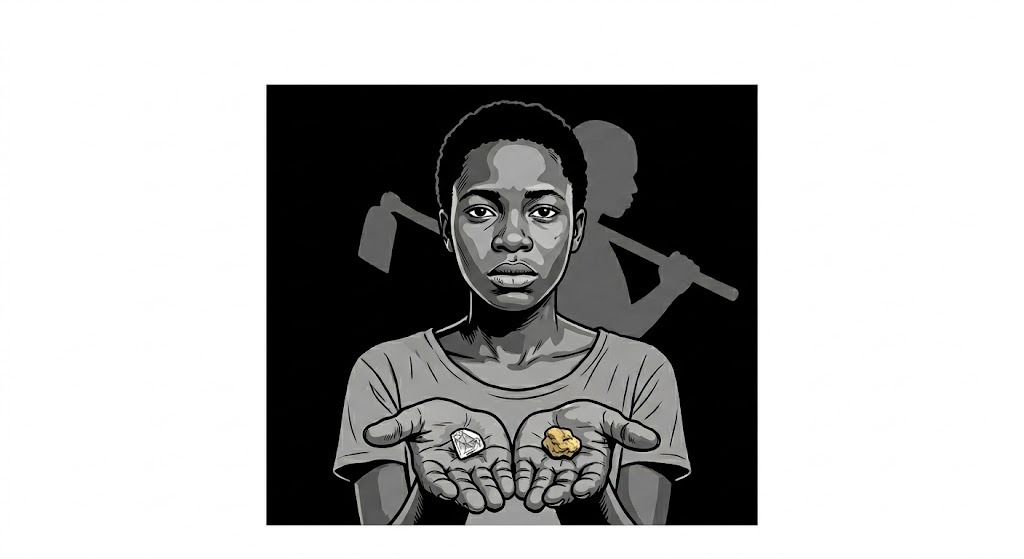
Genetically modified organisms are here with us, for good, not for trials. In 2022, the government legalised the growing of BT Cotton, which was followed by corn. Legally, this opened the door for other GMOs. The legislation, which was being pushed by infamous multinational corporations, saw our parliament remove the ban that was placed in 2012 by the previous regime following the research conducted by Séralini and group on Monsanto's NK603 corn, and of the herbicide Roundup whose research got retracted, not because of any scientific evidence pointing otherwise, but because Monsanto 'lobbied' behind boardrooms to get the paper pulled down, the research trashed and the reputation of the scientists involved, discredited. This was a classic case of how desire for profits at the expense of human and ecology overrides scientific evidence. In the following years, Monsanto embarked on an aggressive campaign to fund several institutions and scientists to carry out research to prove the nutritional value and safety of their products. Media persons were also roped in, including policy makers and legislators from different countries. With this vicious onslaught by multinational agricultural corporations on researchers who go against their interests, there are no individuals or institutions ready to take this battle, fearing the many repercussions of going against such a big entity whose budget exceeds some countries in the Global South by far, and which is geopolitically connected. Most states have relinquished their food system and sovereignty to these multinationals as they feel defenseless.
One inherent characteristic of seeds is the ability to pass their genetic material to their progeny and the ability to grow again. This sacred and inherent ability, which is found in our indigenous seeds, has been sucked out of the GMO things that are branded as seeds. For a seed to be a SEED, it must be able to grow and pass that vitality to the next generation for continuity. But what we are sold are just things that can only be planted once, so I don't think it's right to call them seeds anymore. These are Monsanto's THINGS that we are yet to define or find a term for. GMOs lack this inherent ability since they want farmers to be reliant on them. All this is happening due to human greed and obsession with profits before humans and the ecosystem. In Kenya, this came through flawed laws such as the Seeds and Plant Varieties Regulation of 2022, which prevents the sharing of uncertified seeds, which covers even indigenous seeds. By that one swoop, we surrendered our food system and food sovereignty to the greedy capitalist class. Before lifting the ban, Kenya could have instituted independent research through the many competent research bodies and institutions in the country. This never happened; all we got to hear were the rumours of aggressive 'lobbying' which I call sanitised, white corporate corruption. This is what we heard, and the next time, consignments of GM corn were being imported.
If your plate does not end up with GM foods that are heavy on RoundUp, then you might end up with organic vegetables grown with heavy metals or fruits with bacterial contamination acquired during storage and transportation. This is the sad reality of Kenyans and Nairobians. But it's even sadder if you come from our ghettos, where you have to learn how to smell a thug from 18 and know routes to use, or how not to find yourself in the hands of trigger-happy policemen as a young, poor man. On top of this, now, I have to develop a seventh sense to detect GMOs that are not labelled, mercury, arsenic, and other heavy metals, as KEBS continues to be on a 365-day annual leave from its work. So, apart from avoiding death through a police bullet or a stabbing by an over 'hardworking' youth, I have to be aware of the slow agonising death that may come from the next bite of a mango or my favourite watermelon piece. So, our full-time occupation has become dodging death in Nairobi, where your life can be robbed in the most unexpected ways.
LEARNING FROM OTHERS: THE BT COTTON CONTROVERSY IN BURKINA FASO & INDIA
BT (Bacillus Thuringiensis) Cotton by Monsanto was engineered to produce an insecticide that helps it to fight bollworm, which was wreaking havoc in cotton farms. Its introduction painted a picture of hope to the farmers who were incurring losses due to these destructive worms. It also came with the hope of reducing the agricultural footprint and the usage of pesticides. It has had a lot of controversies and resistance from the natives of these two countries. For starters, Burkina Faso was the leading exporter of cotton in Africa before 2008, when the Bollgard II strain by Monsanto was introduced. Their cotton fetched high prices in the market due to the high-quality fibre, a luxurious sheen to clothing and bedsheets. Their indigenous cotton had long strands, thus good for ginning compared to the short-stranded cotton produced through GM technology. Teetering on the loss of their crops to bollworms, Burkinabes reluctantly agreed to grow the Monsanto variety with the hope that the gene for pest resistance would be passed to their high-quality indigenous cotton variety. This, however, was a monumental failure as the quality of Burkina Faso's cotton plummeted, leading to a loss of the highly competitive market share. According to the United States Department of Agriculture (USDA) report for 2021/2022, Mali, which was Burkina Faso's main competitor, is currently the leading cotton producer in Africa. Surprisingly, when Burkina Faso was adopting BT Cotton, Mali stuck to its high-quality indigenous fibre and worked towards increasing the yield. Today, it leads in Africa both in quality and quantity, followed by Benin and the Ivory Coast, while Burkina Faso comes in as the fourth top producer. Burkina Faso had to rescind their earlier decision and had to go back to conventional cotton in the 2016–2017 season after losses running into millions of dollars by farmers.
The case for India, the second-largest cotton producer, bears a striking resemblance to the stalemate of Burkina Faso with Monsanto. The Indian case comes with a macabre twist due to the massive suicide cases witnessed amongst the indebted Indian farmers. Their change from traditional to GM cotton was necessitated by the need to increase production through embracing High-Yield Varieties (HYVs). From the onset of Monsanto's venture with Maharashtra Hybrid Seeds Company (Mahyco) to become Monsanto Mahayco Biotech India Company (MMTB), they faced a lot of challenges due to the many irregularities involved. To start with, they conducted open farm trials without approval from the Indian regulatory body, Genetic Engineering Approval Committee (GAEC), thus violating the bioethics and bio-policies set by the Indian government.
To the farmers, the promised increase in output remained an illusionary dream stuck in papers as the conventional varieties continued to do much better than their GMO counterparts, which were on trial in 40 locations across 9 states. The few success stories were handpicked by MMTB to act as bait to the local farmers who were required to exchange their high-quality indigenous seeds for Monsanto's bio-engineered seeds. The cost for cultivations on these trials was also hidden to create a façade of success. With time, the farmers relinquished their indigenous cultivars with the hope of better quality and yields. This, however, did not materialise as the cost of production skyrocketed with the cost of seeds hiking by more than 80,000%. Their seeds also came with high demand for fertiliser and agrochemical inputs, which came from Monsanto. With dwindling yields and the pressure to pay debts accrued from chemicals used in the farms, most farmers gave up their lands to Monsanto, while others sold them. This distress led to the shocking statistic of a rise in suicide cases among the farmers, mostly those involved in the Monsanto BT Cotton. More than 10,290 reported cases of suicide by farmers and farm workers in 2022, and 10,786 in 2023, which can be linked to the hardships that came with Monsanto's highly extractive contracts with farmers. These farming communities not only lost their indigenous cotton seeds but also those of millets, oil seeds, and pulses. Studies in the trial farms also indicated massive increases in agrochemical dependency, ecological disruptions due to BT Cotton, both for micro-organisms and other plants, and also pesticide poisoning among the farmers. This poison in the food, air, water bodies, animals, and soil will take years to remediate.
WHO IS THE WINNER AND THE LOSER IN THE GMO SAGA?
The question of lifting the ban is not only a question of food security but also a political and socio-economic question for the farmers of the Global South against the predatory tendencies of corporates from the north, which have been characterised by a fervent urge to control the small economies of developing nations through their aggressive lobbying and corruption. If they are to be engaged to 'assist', then it must happen on terms developed by the individual governments rather than these pro-profit multinationals.
At the end of the day, the winner of any government directive, policy, or law should be the common mwananchi and, as an extension, the ecosystem and natural biosphere which directly affects them. If anything falls short of this, then it should not even be a topic of discussion, as it would be serving other interests that are not for the common betterment of the people.
Where does this leave the farmers in Kinangop or Kaptembwa? Or the millions of consumers in Kenya? Is the farmer left at the mercy of the predatory multinationals? What is the future of our rich indigenous cultivars? Will our farmers lose control of their seeds? Can we have both GMOs for large-scale and conventional seeds by subsistence farmers in the same country without having to worry about horizontal gene transfer? Are we ready to attain food security and sovereignty at the expense of ecological and health implications raised? These questions and many other misgivings must be candidly dealt with before we veer off completely like Burkina Faso and India.
SHOULD WE RESIGN TO FATE?
What must be done then in this herculean task of wrestling the politico-capitalist leviathan? The first answer is ORGANISE! This seems more of a cliché than a clarion call. Those who know the power of organising can attest to how 'lifetime' monarchies, rulers, and corrupt governments have fallen to the power of the people. History has a plethora of such examples through the many people-powered revolutions. In recent times, we have seen uprisings in Kenya to Nigeria, Nepal to Bangladesh, and Morocco to Madagascar. This was achieved through the power of organising and mobilising, whether in the traditional way or through harnessing the power of technology.
Secondly, micro-resistances. Subversive and insurgent actions from urban areas to rural areas where farmers are, we must find ways of poking holes into the system and wear it, even if it means a particle by particle. Everyday forms of resistance are overlooked and overshadowed. We only consider protest and loud resistance as real resistance. I have visited Kayole and seen their indigenous seed banks, and I have visited Kasarani and seen their urban farms. This is how we resist bad laws on one hand and reclaim our food system on the other hand. We have to collect and preserve our indigenous seeds, make cultivars, and exchange them with friends to prevent their wiping out. This will not only improve their chances of survival but also help them adapt to different ecological niches around the country. RESIST in whatever form and manner you can in your everyday work.
Thirdly, let us continuously engage our families, friends, and farmers in continuous everyday political education through our normal conversations. Since there will never be a chance to gather all farmers in a single venue for this, it is therefore our duty to carry out this conversation in our most intimate of spaces, in social places, in phone call conversations, and in any opportunity that arises. We must take the message home. As Ananya Roy puts it, the future is not an empty or neutral space waiting to unfold, but a contested terrain shaped by political struggles, imaginaries, and actions of the present. As a result, it is the (in)actions of today that deliver the future. So, we can either realise or betray the calling of our time as a generation.
Written by,
Gathanga Ndung'u
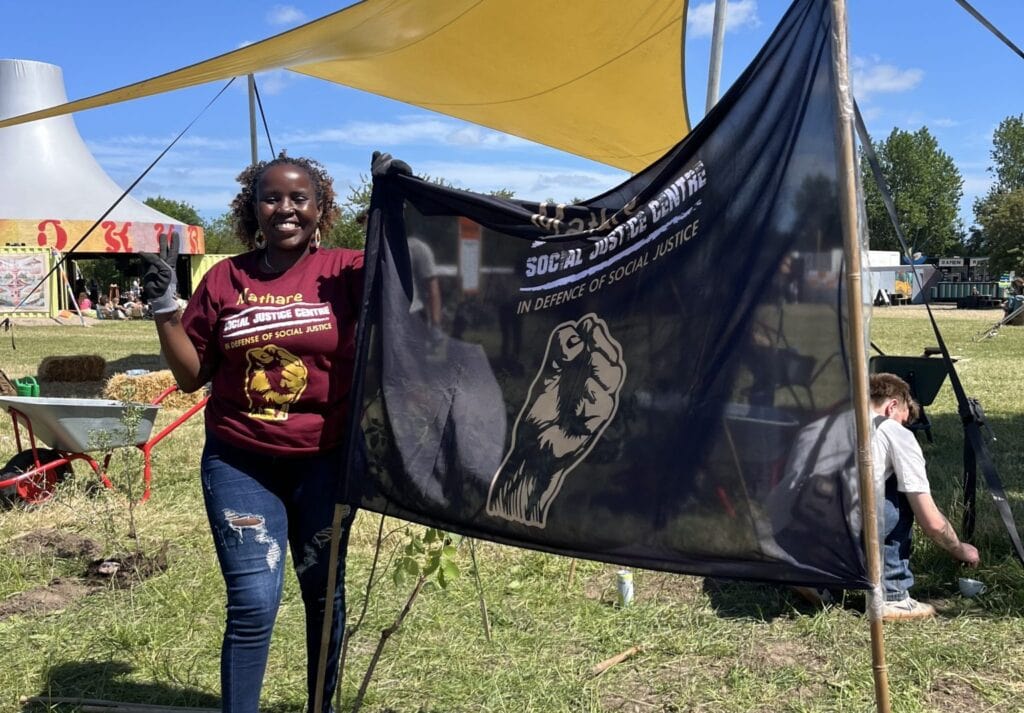
Biotechnologist, Urban Scholar, Researcher, and an Activist with Mathare Social Justice Centre, Political Organiser with Revolutionary Socialist League, and a Writer with Kenya Organic Intellectuals Network (KOIN).
Email: [email protected]


Amondi Reply
This article raises a serious concern about the widening gap between food production, public health, and environmental sustainability. While technology can play a role in addressing food insecurity, food systems and GMOs must be guided by transparent science, long-term health evidence, environmental impact assessments, and meaningful public participation,not profit or political interests. Governments have a duty to protect public welfare, yet ours has exposed us to risks we never consented to. When food, our most basic need, becomes a death trap, what are to do? And when our government prioritizes profit above human safety, what do we do? This is a call for revolution in how food systems are governed,because food is not just a commodity, and survival should never be negotiable.